Anime AI Chat: How Conversational Characters Are Reshaping Fan Fiction and Roleplay
Anime AI Chat: How Conversational Characters Are Reshaping Fan Fiction and Roleplay
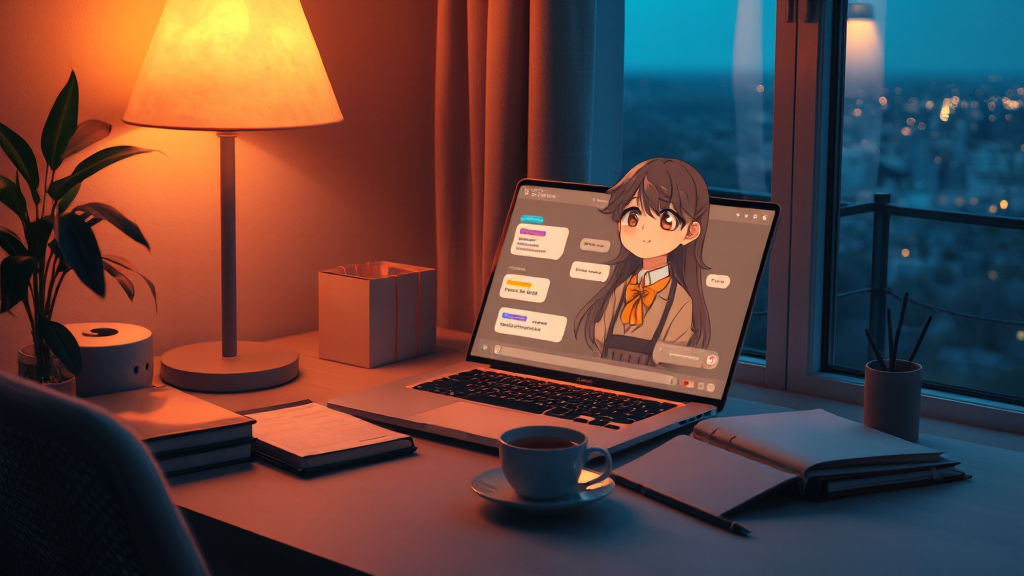
Fans of Japanese animation have always wanted to step inside the worlds they love. For decades, that meant writing fan fiction, drawing fan art, or joining forums where people traded theories about their favorite series. Today, a new kind of interactive storytelling is changing that experience. With anime ai chat, you can hold a real-time conversation with a character who stays in persona, remembers what you said earlier, and reacts to the choices you make. It is not just a chatbot with a cartoon avatar. It is a small, personal stage where the story bends around your words.
This shift matters because it turns passive consumption into active collaboration. Instead of watching a hero solve a problem, you can ask them questions, challenge their decisions, or invent a side quest that never appeared in the source material. The result feels less like reading a wiki and more like sitting across from someone who knows the lore as well as you do.
What Makes Anime AI Chat Different from a Standard Chatbot
A general-purpose chatbot is built to answer questions, summarize text, and complete tasks. An anime-focused conversational character is built for something narrower and, in some ways, harder: staying in character while keeping the conversation coherent over time. That requires a different kind of design.
First, the character has a defined voice. A stoic swordsman does not suddenly start using slang from a different decade. A cheerful magical girl keeps her optimism even when the plot turns dark. The model is guided by a persona sheet that describes speech patterns, values, fears, and relationships. When you write to them, you are not talking to a blank assistant. You are talking to someone with a point of view.
Second, memory matters. If you tell a character that your in-story brother went missing, they should bring that up three messages later. Good anime ai chat systems track key facts across a session so the conversation does not reset every few lines. That continuity is what makes roleplay feel like a story instead of a series of disconnected replies.
Third, tone control is built in. Fans want different experiences on different days. Sometimes they want a lighthearted slice-of-life scene. Sometimes they want a dramatic confrontation. The best tools let you set the mood, the setting, and the relationship between you and the character before the scene begins.
Why Fans Are Drawn to Character-Driven Conversation
There is a simple reason this format is growing: it meets a need that traditional media cannot always satisfy. Anime often ends on a cliffhanger, kills off a beloved character, or leaves a relationship unresolved. Conversation-based storytelling lets fans explore those gaps without waiting for a new season.
Consider a few common motivations:
- Unfinished arcs. A side character who deserved more screen time can finally get a full conversation.
- Alternate timelines. What if the villain had been redeemed? What if the hero never left home? You can play it out.
- Language practice. Some users chat in Japanese or English to practice phrasing while staying engaged with a topic they enjoy.
- Creative warm-up. Writers use these sessions to test dialogue before committing it to a script or novel.
- Comfort and company. A familiar character voice can be reassuring after a long day, especially for fans who do not have a local community.
None of these replace the original work. They extend it. The source material provides the foundation, and the conversation adds a personal layer on top.
How the Technology Actually Works Behind the Scenes
Under the hood, an anime ai chat experience combines several layers. The first is a large language model that generates text. On its own, that model is generic. The second layer is a character card or persona definition that shapes how the model responds. This is where details like backstory, speech style, and boundaries are stored.
The third layer is memory. Short-term memory keeps the last several messages in context. Long-term memory stores facts the user wants the character to remember, such as a name, a promise, or a plot point. Some systems let you edit that memory directly, which is useful if the character misremembers something important.
The fourth layer is safety and moderation. Any public conversational tool needs guardrails so that scenes do not drift into harmful territory. Good platforms make those limits clear without breaking immersion for normal use.
Finally, there is the interface. A clean chat window, easy character selection, and the ability to save or export transcripts make a big difference. When these pieces work together, the technology fades into the background and the story takes over.
Writing Prompts That Get Better Responses
The quality of an anime character chat depends heavily on how you open the scene. A vague hello often produces a vague reply. A specific setup gives the character something to react to. Here are practical habits that improve results.
Set the scene first. Instead of typing “Hi,” try something like: “It is raining outside the school gate, and you are waiting for me with an umbrella. You look annoyed.” Now the character has a location, a mood, and a reason to speak.
Give your character a role. Tell the AI who you are in the story. Are you a rival, a childhood friend, a new student, or a stranger with a secret? Relationships shape dialogue more than almost anything else.
Ask open questions. Questions that can be answered with yes or no tend to stall a scene. Questions like “What did you really think when you saw me leave?” invite a longer, more emotional response.
Use stage directions sparingly. A short action in asterisks or parentheses can help, but too many directions turn a conversation into a script reading. Let the character carry some of the scene.
Correct gently. If the character forgets a detail, remind them in plain language. Most systems handle corrections well when they are phrased naturally.
Roleplay, Fan Fiction, and the Ethics of AI Characters
Whenever a new creative tool appears, questions follow. Is it fair to use a character someone else created? Does AI conversation replace human writers? These are reasonable concerns, and the honest answer is that context matters.
For personal, non-commercial play, most fans treat these sessions the way they treat private fan fiction: a way to explore ideas and enjoy a world they love. Problems arise when AI-generated content is sold, misrepresented as official, or used to harass real creators. Respecting the original work and its creators is the baseline.
It is also worth remembering that AI characters are not people. They do not have feelings, even when the writing is convincing. That does not make the experience worthless. Reading a novel also involves reacting to characters who do not exist. The value comes from the ideas, the emotions, and the creativity the user brings to the exchange.
For writers, these tools can be a playground rather than a replacement. Testing a conversation with a simulated version of a character can reveal whether the dialogue sounds natural. It can also spark new directions that a writer might not have considered alone. The final draft still belongs to the human author.
Choosing a Platform and Getting Started
Not all anime ai chat tools are built the same way. When comparing options, look at a few practical factors. Character variety matters if you want to explore many series and archetypes. Memory quality matters if you plan to build a long storyline. Response speed matters if you want a natural back-and-forth rhythm. And clarity around privacy matters if you plan to share personal details in your scenes.
If you want to chat with anime AI characters, start with a short scene rather than an epic. Pick one character, one location, and one goal. See how the conversation flows. Then expand. A ten-minute session is enough to learn whether the tool fits your style.
Beginners often make the mistake of trying to control every line. Give the character room to surprise you. Some of the best moments come from an unexpected reply that sends the scene in a new direction. That unpredictability is part of the appeal.
The Future of Interactive Anime Storytelling
Conversational characters are still early in their development. In the coming years, we can expect better memory, richer emotional modeling, and support for multi-character scenes where several personalities talk to each other. Imagine a group chat with an entire squad, each with their own agenda. That is not far off.
Voice integration is another frontier. Text-based chat already feels personal, but hearing a character respond in a consistent tone would deepen immersion further. Combined with visual avatars and branching story logic, the line between reading a story and living one will keep getting thinner.
For now, the appeal is simpler. You type a line, and someone from a world you love types back. That small loop, repeated over hundreds of messages, is enough to create something memorable. Whether you are continuing a favorite series, testing a story idea, or just passing an evening, anime ai chat offers a new way to spend time in the worlds that matter to you.
FAQ
Is anime ai chat free to use?
Many platforms offer a free tier with limited messages or characters, plus paid plans for heavier use. Check the specific site for current limits and pricing.
Can the AI remember details from earlier in the conversation?
Yes, most modern systems keep short-term context and some support long-term memory for key facts. You can usually remind the character if something important is forgotten.
Do I need to know a lot about a series to start?
No. You can begin with a simple scene and let the character introduce context. Familiarity helps, but curiosity is enough to get started.
Are these conversations private?
Privacy policies vary by platform. Read the terms before sharing sensitive personal information, and prefer tools that clearly explain how transcripts are stored.
Can I use anime ai chat to write my own stories?
Absolutely. Many writers use it as a brainstorming and dialogue-testing tool. The final story and its publication remain your responsibility.